What it is
Skin tints are low-pigment bases that let your own skin show through. Technically many are just very sheer liquids, but they're designed around a different goal: evening out tone and adding a little glow rather than masking. Most contain a higher share of water, humectants such as glycerin, and often a sunscreen filter.
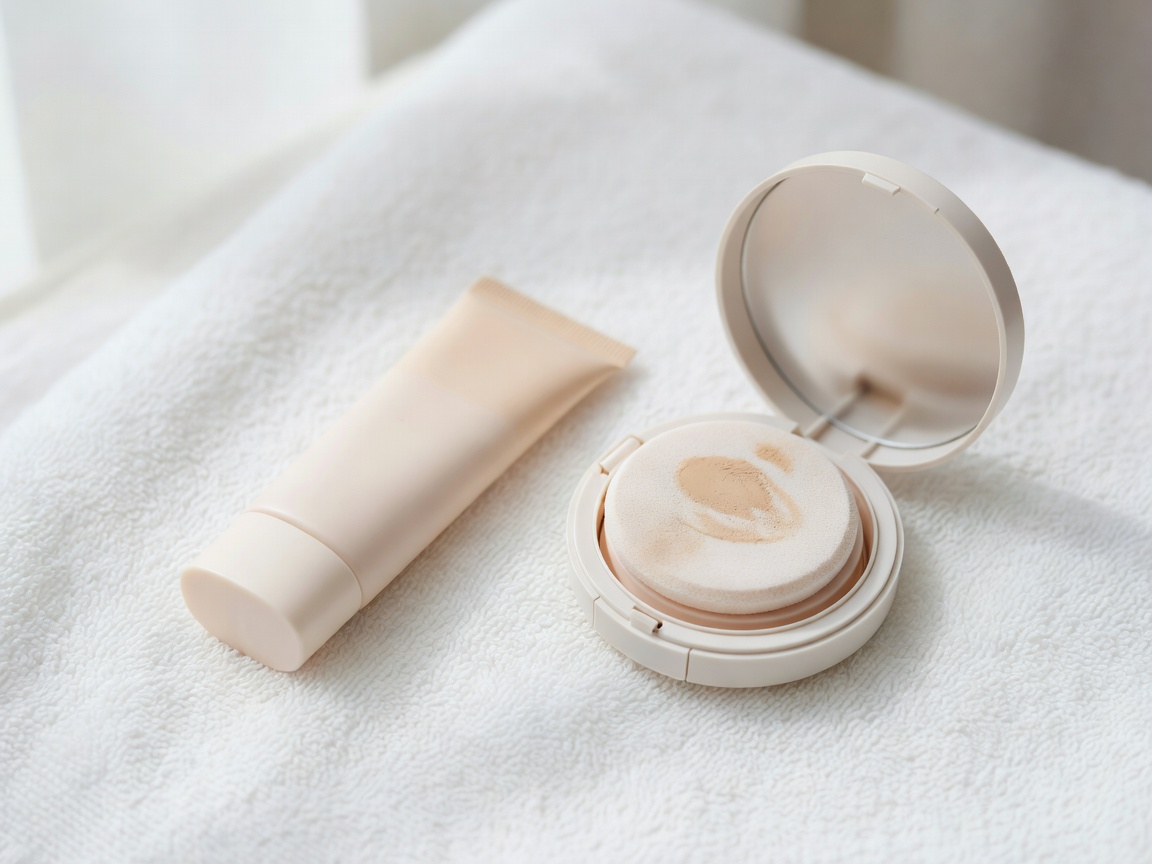
The family has several branches with overlapping names. The BB cream, short for "blemish balm", is commonly traced to formulas created by German dermatologist Christine Schrammek in the 1960s for use after skin treatments; the format was later reinvented and popularised in South Korea before spreading worldwide. CC creams ("colour correcting" or "complexion corrector") followed, usually with a pigment tweak aimed at redness or sallowness. In 2008 Amorepacific launched the IOPE Air Cushion, a sponge soaked in tinted fluid inside a compact, and the cushion format became a staple across Asian and then global beauty shelves.
The lesson for comparison shopping: the name on the tube tells you the category, not the coverage. One brand's CC cream can cover more than another brand's foundation, so swatch before you trust the label.
Compare the five light formats
| Format | Pros | Cons | Best for |
|---|---|---|---|
| Tinted moisturiser | Hydrating, very forgiving to apply with fingers | Lowest coverage; can feel greasy on oily skin | Dry or normal skin, weekends |
| Skin tint serum | Featherlight, buildable, very skin-like | Runny texture; small shade ranges in some lines | Even skin, minimalist routines |
| BB cream | Light coverage plus skincare feel; often includes SPF | Shade ranges historically narrow; varies widely by brand | Light coverage in one step |
| CC cream | Targets redness or dullness with corrective pigment | Correcting tint may not suit every undertone | Redness-prone or sallow skin |
| Cushion compact | Portable, quick to pat on and touch up | Sponge hygiene; less product per compact | Travel, dewy finish, top-ups |
The SPF note
Tints often carry SPF 30 or higher, and they're the format most likely to be worn as "my sunscreen". The same rule applies as for powder: the labelled number comes from tests at 2 mg/cm² under ISO 24444, and a sheer tint is almost always applied far more thinly. Think of it as a helpful extra layer over a proper sunscreen, especially for long days outdoors.
Test it like this
- Use your normal amount. A pea-sized dot for the whole face is typical. Swatching a thick blob exaggerates coverage you won't get at home.
- Swatch on the cheek, not the jaw. Tints are about evening out redness and dullness, which mostly live on the cheeks and around the nose.
- Judge the glow. In daylight, check whether the finish reads as healthy sheen or as oil. Dewy can turn shiny by midday on combination skin.
- Look for a cast. Mineral filters such as zinc oxide can leave a pale or grey veil on deeper skin. A tinted formula should cancel this, so check it does.
- Layer over your skincare. Apply over your usual moisturiser and sunscreen to check for pilling before you commit.
Who it fits
Skin tints suit fairly even skin, people new to makeup, and anyone who wants five-minute mornings. If you have significant pigmentation or redness you want covered, a tint alone will feel underpowered; pair it with a little cream stick where needed, which keeps the overall look light.
Verdict: the gentlest shade in the book. Choose it to even out rather than cover up, test it at real-life thickness, and keep your sunscreen as a separate step.