What it is
Powder foundation is pigment blended with a dry filler, typically talc, mica or silica, sometimes held together with a small amount of binder oil so it can be pressed into a pan. Where a liquid sits on skin as a thin film, powder sits as a layer of fine particles. That's why it absorbs oil so well, and also why it can look dusty on dry or flaking skin.
Powder is the oldest format in the book. Max Factor's Pan-Cake, developed for colour film and sold to the public from 1937, was a pressed cake applied with a damp sponge, and it set the template for compact foundation. Decades later, loose mineral powders built on zinc oxide and titanium dioxide, popularised in the 2000s by brands such as bareMinerals, made the format a favourite for people looking for short ingredient lists.
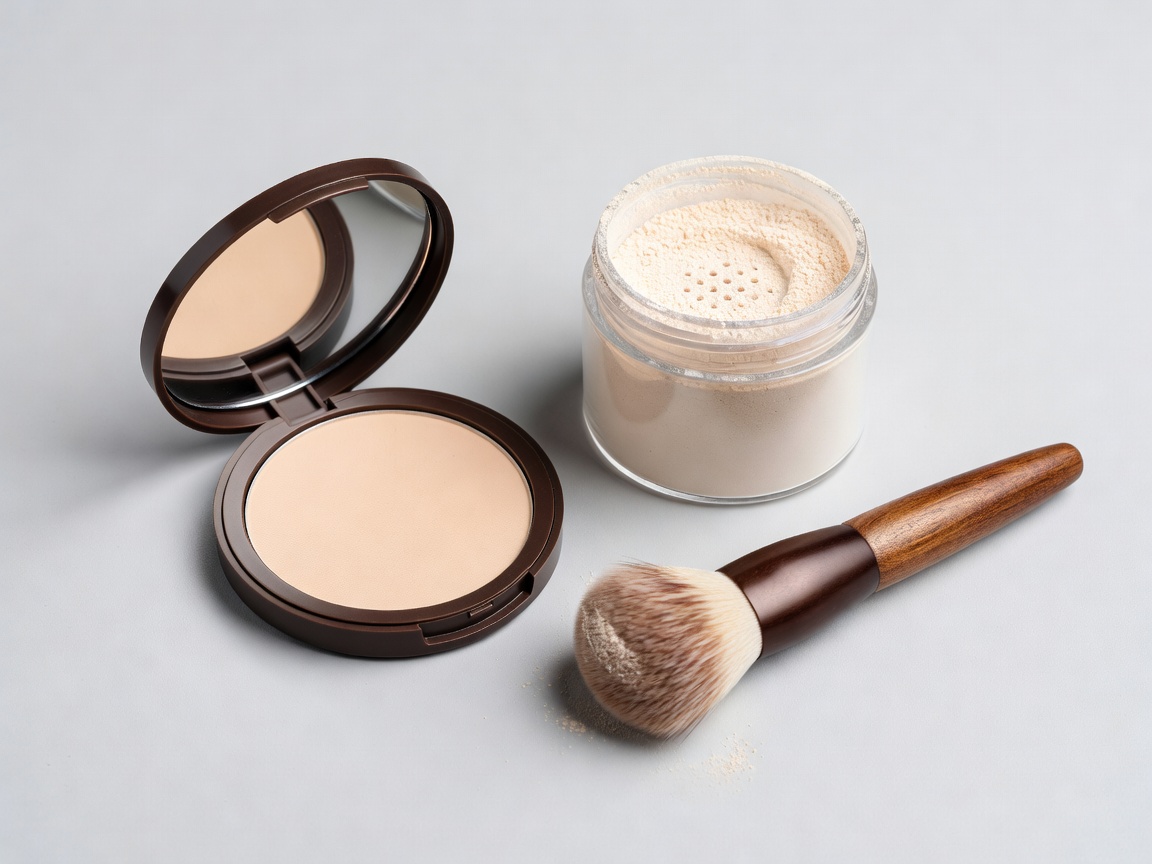
Today you'll meet three main styles: pressed powder in a compact, loose powder in a sifter jar, and mineral powder, which is usually loose and leans on minerals rather than talc as its base.
Compare the three powder styles
| Style | Pros | Cons | Best for |
|---|---|---|---|
| Pressed | Portable, mess-free, quick to apply with a sponge or brush | Can look cakey if layered; binders may feel heavier | Touch-ups, handbags, oily T-zones |
| Loose | Finest, most diffused finish; easy to keep sheer | Messy to travel with; harder to control coverage | Soft-focus finish, setting over liquid |
| Mineral | Often short ingredient lists; buildable; many fragrance-free | Bismuth oxychloride in some can itch; can emphasise dry patches | Sensitive or reactive skin (after a patch test) |
The SPF reality
Many powders, especially mineral ones, carry an SPF on the lid. Here's the catch a patient mentor would point out: SPF is measured under the ISO 24444 method at a dose of 2 mg of product per square centimetre of skin. For a whole face, that's a thick, visible layer, far more powder than anyone would wear. At normal amounts, you get only a fraction of the stated protection.
So treat powder SPF as a bonus top-up, never as your sunscreen. Apply a dedicated sunscreen first, let it set, then press powder over it so you don't disturb the layer underneath.
Test it like this
- Swatch with a brush. Fingers press powder heavier than you'll ever wear it. Use a clean brush on the jawline, one patch per shade.
- Check dry and damp. Mist one half lightly. Powders often look a touch deeper once they meet skin oils or water.
- Wait for your oil. On oily skin, judge again after an hour. Powder mixed with sebum can turn orange on some skin.
- Blot test. Press blotting paper to your nose at midday. Lots of pigment on the paper suggests the formula isn't holding.
- Look at dry spots. Check around the nose and mouth with a hand mirror. Powder that clings to flakes isn't the right fit.
Who it fits
Powder shines for oily and combination skin, for anyone who wants a single quick step, and for warm days when a liquid would slide. It's less friendly to very dry or textured skin. If you love the convenience but get dryness, try a thin hydrating primer first, or switch to a cream-to-powder compact from Shade 03.
If you prefer talc-free formulas, check the INCI list for "talc" directly rather than relying on front-of-pack claims.
Verdict: the fastest shade in the book, and the best at controlling shine. Pair it with real sunscreen, swatch with a brush, and give it an hour before you decide.