What it is
Liquid foundation is pigment suspended in an emulsion: tiny droplets of oil or silicone spread through water, or water spread through silicone. That emulsion is the reason liquids are so adaptable. A water-heavy formula spreads thin and stays sheer; a silicone-heavy one glides, blurs texture and sets into a flexible film that can last a long working day.
The colour itself almost always comes from the same small family of pigments. Iron oxides (CI 77491 red, CI 77492 yellow, CI 77499 black) are blended with titanium dioxide (CI 77891) for lightness and opacity. Shade ranges are built by adjusting those ratios, which is why two bottles both labelled "medium neutral" from different brands can look completely different on your jaw. Treat names and numbers as a starting point, never as a match.
Liquids also sit at the centre of the shade-range conversation. When Fenty Beauty launched in 2017 with 40 shades of its Pro Filt'r foundation, a liquid, it pushed much of the industry to widen ranges and to describe undertones more clearly. Tools like the ten-step Monk Skin Tone Scale, published by Google with sociologist Dr. Ellis Monk in 2022, have since given people a more inclusive vocabulary for talking about depth, even though no foundation brand maps neatly onto it.
Compare the three liquid styles
Lay them side by side and the differences come down to the base. Here's how they test against each other in our studio routine.
| Style | Pros | Cons | Best for |
|---|---|---|---|
| Water-based | Light, breathable feel; easy to sheer out; layers well over most skincare | Shorter wear; can slide on very oily skin; may need setting | Normal to dry skin, natural finish, warm climates with blotting |
| Silicone-based | Smooth slip, blurs pores and fine texture, good comfort and longevity | Can pill over some water-based skincare; may feel "coated" | Combination and textured skin, photos, events |
| Long-wear / transfer-resistant | Holds 12+ hours, resists masks and humidity, high coverage | Sets fast so blending time is short; can look flat or dry on dry skin | Oily skin, long shifts, weddings and hot days |
Who it fits
Because liquids span so many finishes, the question is less "is liquid right for me?" and more "which liquid?" A few patient rules of thumb:
- Dry skin: look for hydrating or "luminous" claims and glycerin or squalane high in the ingredient list. Avoid long-wear mattes, which can settle into dry patches.
- Oily skin: oil-free or long-wear formulas with a matte or soft-matte finish usually last longest. Set the T-zone lightly with powder.
- Combination skin: satin finishes are the forgiving middle ground; spot-set only where you shine.
- Textured or mature skin: two thin layers beat one thick one. Silicone-based formulas tend to blur best without collecting in lines.
- Sensitive skin: fragrance-free formulas reduce one common trigger. Patch-test anyway.
Test it like this
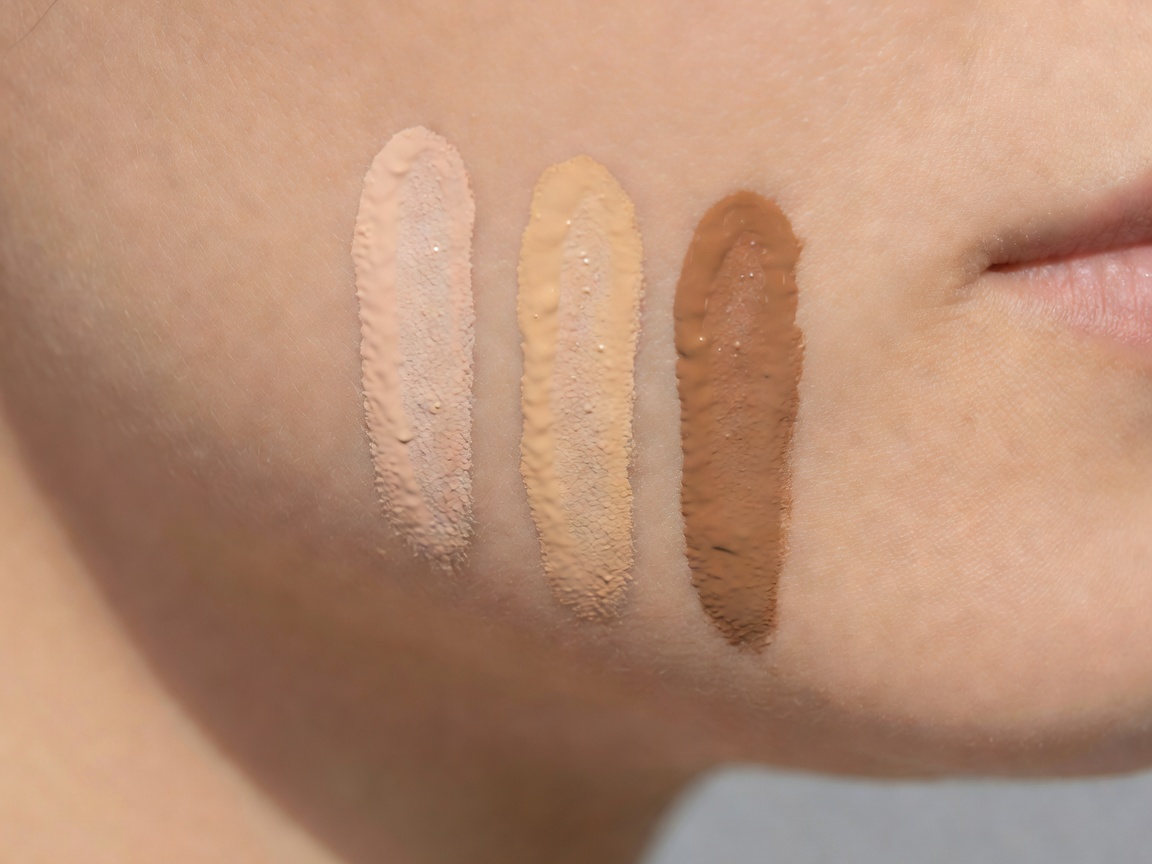
- Pick three. Choose your best-guess shade plus one lighter and one deeper. Swatch them as stripes from cheek down onto the neck.
- Find daylight. Step to a window or outside. Store lighting is often warm or very bright and hides mismatches.
- Wait fifteen minutes. Many liquids deepen or warm slightly as they dry and oxidise. Judge again once they've settled.
- Wear-test one side. Apply your winner to half your face for a full day. Check at midday and evening for separation around the nose and chin.
- Take two photos. One with flash, one without. Heavy titanium dioxide or zinc oxide can show a pale cast, often called flashback.
Label notes
Read the ingredient list in INCI names: dimethicone or cyclopentasiloxane high up signals a silicone base, while aqua first with few silicones points to a water base. Check the period-after-opening symbol, the little open jar, often marked 12M for liquids. Terms like "non-comedogenic" are marketing claims rather than a single regulated standard, so let your own skin's response decide.
Verdict: liquid is the shade to test first if you're unsure where to start. It covers the widest range of finishes and skin types, so your result tells you which direction to explore next.